
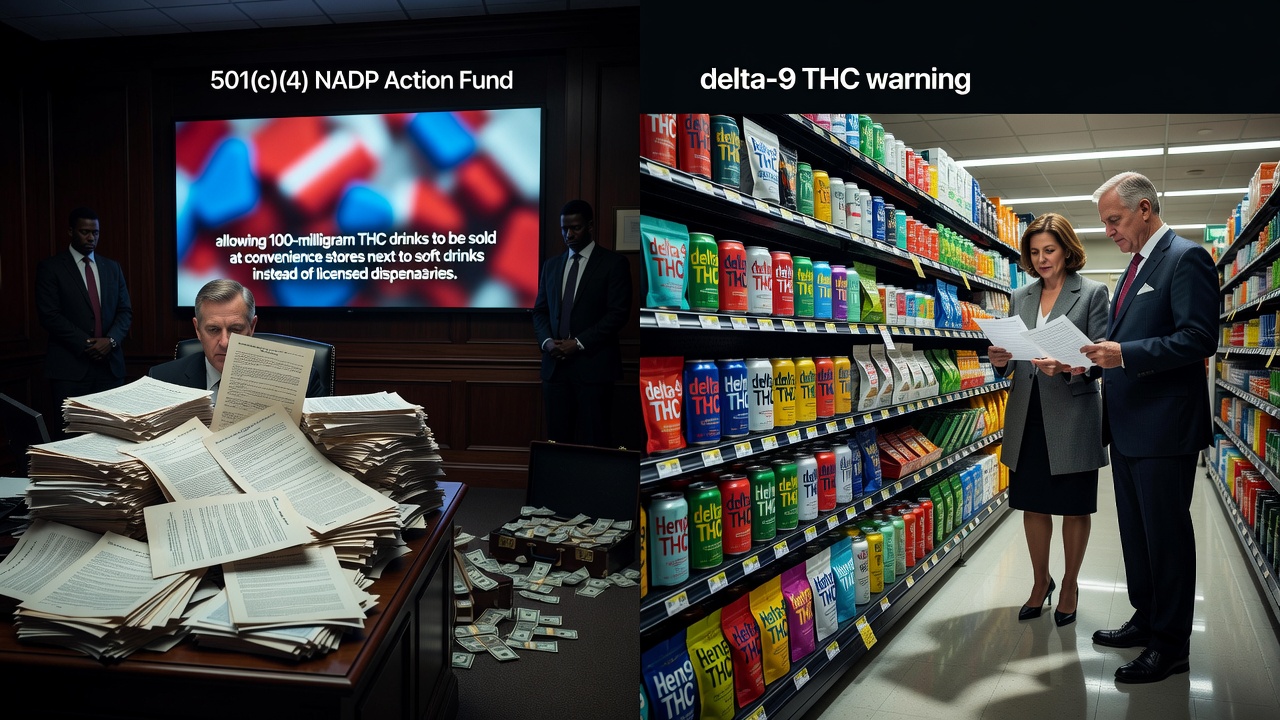
A newly formed 501(c)(4) called NADP Action Fund has launched a 30-second ad attacking Sen. Tim Sheehy (R-MT) over his work on legislation that would keep hemp-derived THC products federally legal. The group discloses neither its donors nor the meaning of its own acronym, and that opacity is itself becoming part of the story in an industry fight that already has plenty of players obscuring their interests.
What the ad claims, and what's actually at stake
The spot accuses Sheehy of wanting THC drinks sold "at the convenience store, next to soft drinks" rather than through licensed dispensaries, and cites products containing 100 milligrams of THC as evidence of lax oversight. Whatever one thinks of the framing, the underlying policy question is real: hemp-derived cannabinoids with less than 0.3 percent delta-9 THC on a dry-weight basis became federally legal under the 2018 Farm Bill. Legislation signed late last year redefined hemp to cap total THC at 0.4 milligrams per container, a threshold that would effectively zero out most intoxicating hemp beverages and edibles currently on shelves. A funding bill signed last month pushed that effective date to December 11, buying lawmakers time to write actual regulations instead of just letting a ban take effect. Synthetic cannabinoids not naturally produced by the cannabis plant still face recriminalization on November 12 under a carve-out in that bill.
Sheehy, working with Sen. Amy Klobuchar (D-MN) on unfiled legislation, wants to call off the broader ban and replace it with a regulatory structure - age gating, product standards, and presumably something closer to the compliant packaging and lab-testing regimes that state-licensed marijuana operators already live under via COA requirements and seed-to-sale tracking.
Why the source of the ad matters to operators
Nobody interviewed by Marijuana Moment could confirm who funded NADP Action Fund. Some hemp industry sources suspect affiliation with state-licensed marijuana businesses, which have genuine competitive grievances: hemp beverages move across state lines and sit on convenience store and grocery shelves without the license caps, vertical integration rules, or excise tax burden that dispensary operators absorb. Others in the marijuana space guessed the money could come from prohibitionist groups opposed to both hemp intoxicants and adult-use cannabis broadly. That ambiguity is the point of dark money vehicles - no disclosure requirement means no way to verify motive, and that cuts against the transparency both hemp and marijuana operators claim to want from regulators.
A split inside the reform movement itself
The disagreement isn't just hemp versus marijuana. The Marijuana Policy Project is pushing Congress to reverse the ban and regulate all cannabinoids under one framework. A former MPP staffer now at the American Trade Association for Cannabis and Hemp argued the opposite in a recent op-ed, calling the unregulated hemp beverage market a "charade" that undermines the broader push for legalization by normalizing synthetic and high-potency products outside dispensary compliance infrastructure.
For dispensary operators and multi-state operators, the practical stakes are straightforward. If hemp beverages retain a federal pathway outside licensed retail, that's direct competition without the tax load, testing mandates, or zoning restrictions dispensaries carry. If the ban proceeds as written, wholesale menus built around hemp-derived drinks disappear from convenience and grocery channels, potentially pushing some consumer demand back toward licensed storefronts - though not without disruption to brands and suppliers who built businesses on the Farm Bill loophole. Either outcome reshapes wholesale pricing and product mix well beyond December.