
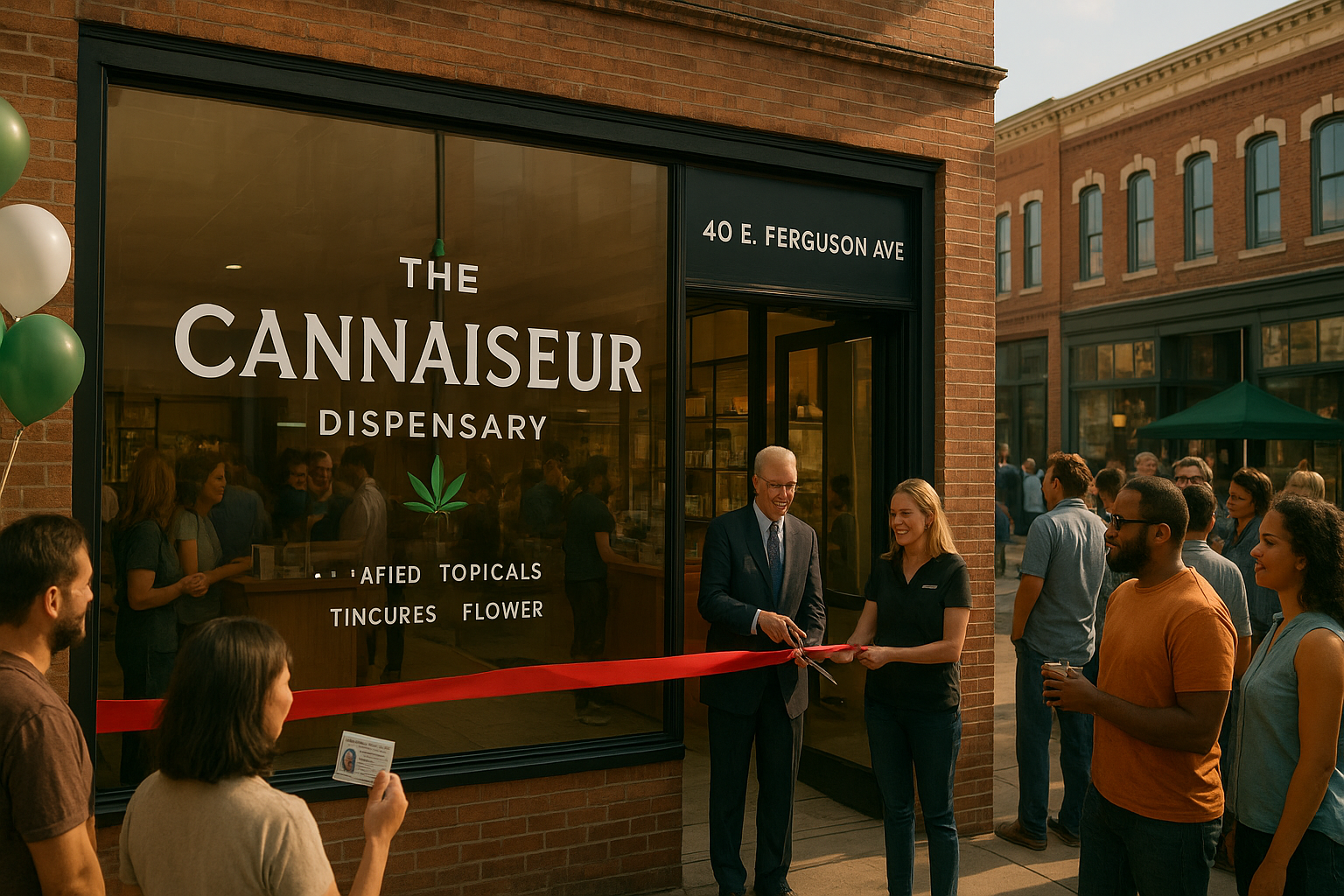
WOOD RIVER - After a stretch of delays familiar to anyone who has tried to bring a licensed cannabis storefront from paper to sidewalk, The Cannaisseur Dispensary will hold its grand opening and ribbon cutting on Friday, August 7, 2026, at 40 E. Ferguson Ave. in downtown Wood River, Illinois. The ceremony begins at 3:30 p.m., with a community celebration immediately following, featuring food and drinks from Roasterz and Heaterz and Mean Street Tattoo Shop.
The delay itself is worth pausing on, because it says something about how adult-use retail actually gets built in Illinois. Between securing a conditional license, satisfying local zoning, finishing buildout to state security specifications, and passing final inspection, operators routinely spend well over a year moving from approval to open doors. Behind the scenes, that buildout period also means integrating point-of-sale systems, establishing compliant packaging protocols, and configuring inventory tracking that reports into the state's regulatory framework - the kind of back-end work that customers never see but regulators absolutely check. Illinois dispensaries operate under one of the more rigorous seed-to-sale tracking regimes in the country, and getting that infrastructure right before opening day, using platforms like Illinois seed-to-sale dispensary software, is not optional - it's the price of keeping a license.
What a Storefront Delay Actually Reflects
To put it plainly, a dispensary that takes a long time to open is not necessarily behind schedule in a bad way. Illinois cannabis licensing involves multiple layers of review - state approval, municipal sign-off, fire and building code compliance, and security plan verification - and each layer can stall a build for months. Operators who rush this process risk failing inspection or, worse, opening with compliance gaps that draw regulatory scrutiny later. The Cannaisseur's own framing, that opening "thoughtfully and responsibly" mattered more than opening fast, tracks with how most experienced operators talk about the process once the ribbon is actually cut.
Retail Model: Consultation Over Transaction Speed
The Cannaisseur is positioning itself around guided, one-on-one consultations rather than high-volume throughput, with personal appointments becoming available the week after opening. That model carries real operational tradeoffs. Slower per-customer service times can limit daily transaction counts, which matters when a store is also carrying the tax burden - including the federal 280E limitations that deny standard business deductions to plant-touching companies - that squeezes margins across the industry. In practice, though, a boutique consultation approach can support stronger customer retention and reduce return-driven friction, since staff are spending time matching product categories, from flower and edibles to topicals and tinctures, to individual comfort levels rather than pushing quick checkout counts.
Compliance Basics Still Apply
- Entry is restricted to guests 21 and older with valid government-issued photo ID.
- All products sold must carry lab testing results and compliant packaging under Illinois adult-use rules.
- Store hours, security protocols, and inventory logs remain subject to ongoing state oversight after opening day.
None of that changes because a storefront finally opens. If anything, the operational scrutiny increases once real transactions, real inventory, and real foot traffic replace the buildout phase - which is exactly when seed-to-sale reporting accuracy and point-of-sale reconciliation start to matter most.