
Michigan's cannabis market has a supply problem that everyone talks about and a demand problem that almost nobody does. Retailers sold roughly $3.17 billion worth of product in 2025, down about $113 million from the year before, even as unit volume climbed. The math only works one way: prices collapsed. An ounce of flower dipping below $60 at retail tells you everything about how brutal wholesale pricing has become for growers and processors squeezed by oversupply and a new 24 percent wholesale tax.
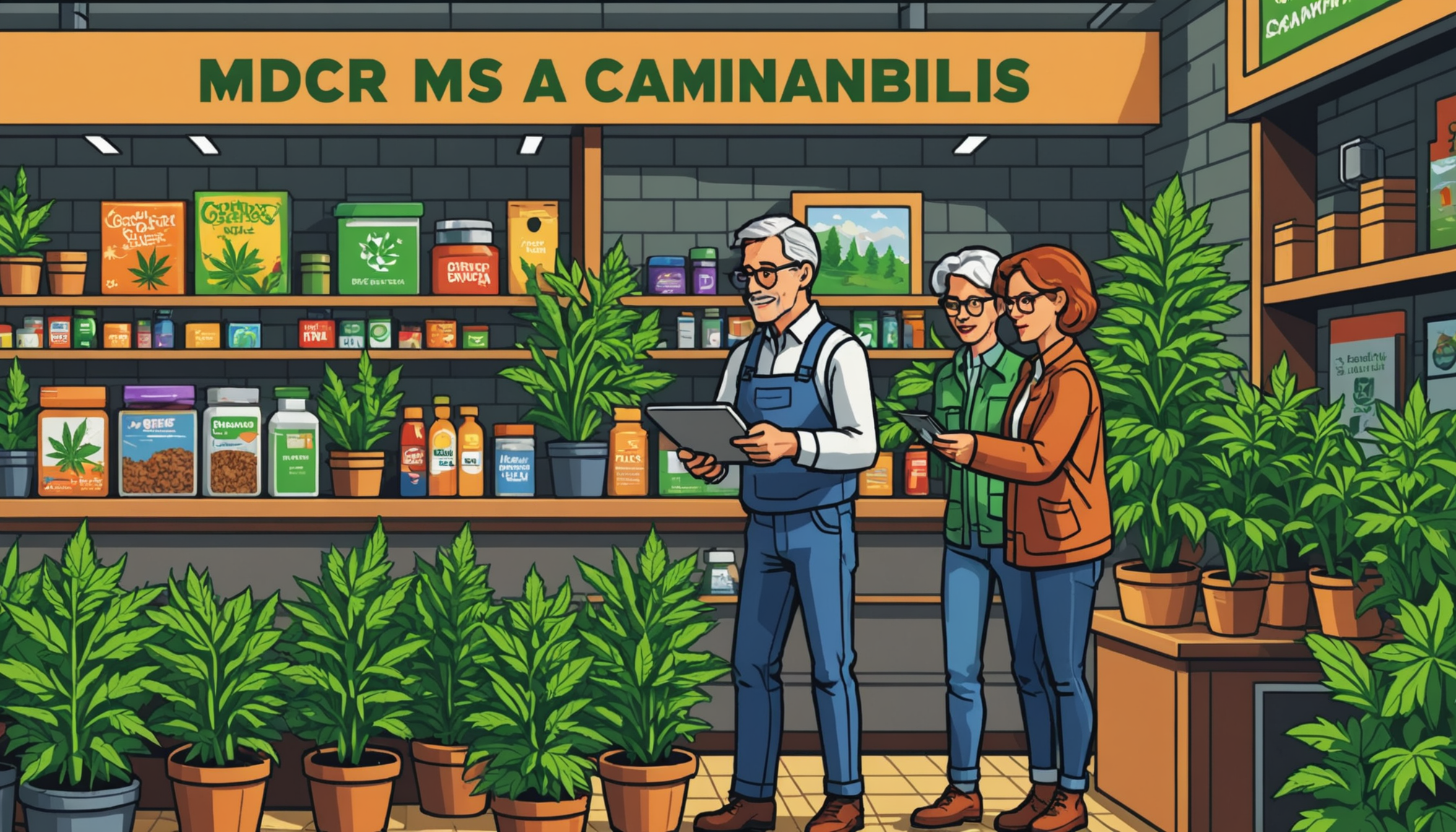
But there's a demand-side story here that deserves more attention than it's getting. Nearly 22 percent of Americans ages 55 to 65 reported consuming cannabis in the past year, according to the Monitoring the Future survey compiled by the University of Michigan and highlighted by NORML - the highest share the survey has ever recorded. Baby Boomers already account for an estimated 12.6 percent of tracked national cannabis spending, per Headset data, trailing Millennials, Gen X and Gen Z but far from irrelevant. Apply that share to Michigan's 2025 sales and you get an estimated $399 million Baby Boomer market; apply it to Ohio's $836 million in recreational sales and you get roughly $105 million more. As operators across the Midwest look for ways to reach this cohort efficiently, some are also examining infrastructure built for other emerging markets - platforms offering cannabis delivery software rhode island have shown how tailored logistics and simplified ordering systems can serve customers who aren't comfortable navigating a crowded dispensary menu.
Different Customer, Different Product Mix
Here's the catch: older consumers don't shop like 25-year-olds, and treating them as a smaller version of the existing customer base misreads the opportunity. University of Michigan polling on adults 50 and older found the top reasons for use were relaxation (81 percent), sleep (68 percent), enjoyment of effects (64 percent) and pain relief (63 percent). Forty percent said they were trying to address a medical condition - a reminder that budtenders and marketing teams need to stay well clear of anything resembling a therapeutic claim, since that's a regulatory line, not a suggestion.
In practice, this points retailers toward lower-dose edibles, tinctures, topicals and balanced THC/CBD ratios rather than high-potency flower or concentrates. SKU management built around younger, experienced consumers doesn't automatically translate. A dispensary's budroom inventory and wholesale menu built for potency-chasing regulars may simply miss this customer entirely.
Service and Education as Competitive Advantage
Someone returning to cannabis after three or four decades away isn't shopping for THC percentage; they're trying to figure out what a vape cartridge even is. That's a service opportunity in a market where price competition has gutted margins. Staff training, in-store education and simplified point-of-sale interactions could matter more for this segment than another discount promotion.
The Compliance and Safety Backdrop
None of this comes without risk. Eighty-three percent of Michigan adults 50 and older agreed cannabis today is far stronger than what was available decades ago, and older consumers are more likely to be on prescription medications, raising interaction concerns. Michigan polling found 21 percent of consumers 50 and older had driven within two hours of use at least once in the past year, and more than a third of monthly consumers had never discussed cannabis use with a health care provider.
- Retailers must avoid unsupported health or medical claims tied to sleep, pain or mood products
- Age verification and compliant packaging remain non-negotiable regardless of the customer's generation
- Lab testing and COA transparency matter more, not less, for consumers new to modern potency levels
- Staff should be trained to flag possible medication interactions without offering medical advice
Michigan's oversupply problem won't disappear because Boomers start buying gummies. But the assumption that the state has already found every available customer looks shaky. Between Michigan and Ohio, the estimated Baby Boomer cannabis market already approaches half a billion dollars a year - and Ohio's younger recreational program still has room to mature. For operators hunting for margin in a price-crushed market, the next real growth segment may not be the customer walking in at 25. It may be the one walking in at 65, asking a lot of questions, and needing a completely different kind of retail experience.