
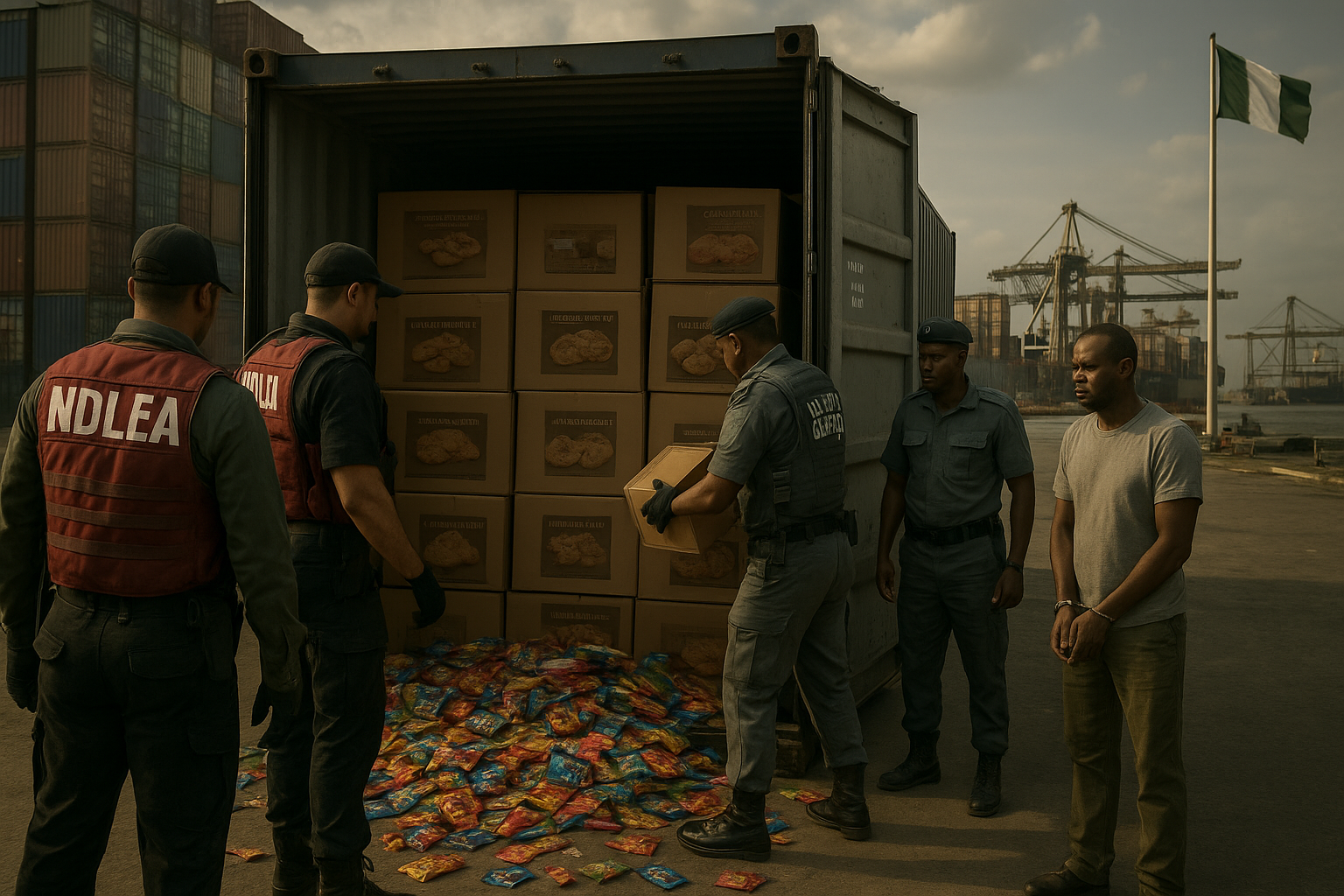
Nigeria's National Drug Law Enforcement Agency has intercepted 442 packets of cannabis-infused cookies and gummies, totaling 309.4 kilogrammes, concealed inside a 40-foot shipping container at the TinCan Island Port Complex in Lagos. The discovery, made on August 4 during a joint inspection with the Nigeria Customs Service, resulted in the recovery of 73 cartons of the confectioneries and the arrest of a suspect identified as Larry Nnaji. NDLEA said the seizure was part of a broader run of interdictions across several states between August 3 and 8, including large hauls of skunk in Oyo, Edo and Abia states.
For anyone watching the legal cannabis trade from the outside, this kind of seizure is a reminder of what happens in markets without a regulated supply chain to fall back on. In jurisdictions where cannabis edibles are lawfully manufactured and sold, product movement is tracked from cultivation through processing to point of sale, typically through seed-to-sale systems like METRC, with every batch tied to a certificate of analysis and a compliant label. Retailers operating under that framework rely on integrated point-of-sale infrastructure to keep inventory, tax records and compliance logs aligned - the kind of function handled by platforms such as POS software for California cannabis retailers, which link sales data directly to state reporting requirements. Nigeria has no such regulated channel; cannabis remains illegal there, so seizures like this one land entirely in the enforcement column rather than the compliance one. POS software for California cannabis retailers
Why Infused Edibles Complicate Interdiction
Cannabis-infused cookies and gummies present a distinct challenge for customs and drug enforcement units because they don't look like contraband. Packaged as ordinary confectionery, they move through cargo manifests, courier networks and retail supply chains without raising the same flags as plant material or concentrated resin. That's precisely why traffickers favor them - the product blends into legitimate commercial shipping until someone physically opens the carton. In regulated markets, this same characteristic is why edible dosing, child-resistant packaging and clear labeling are treated as non-negotiable compliance requirements rather than administrative formalities. An edible that looks like a standard snack needs a label that unmistakably says otherwise.
Enforcement Pressure and the Limits of a Single Seizure
NDLEA Chairman Brig. Gen. Mohamed Buba Marwa commended officers from the Drug Enforcement Administration and Investigations Directorate, along with teams at Akanu Ibiam International Airport and the Ondo, Oyo, Edo, Abia, Seme and TinCan commands, for the recent run of arrests and recoveries. He also directed personnel to maintain what the agency describes as a balanced approach - enforcement paired with other measures addressing drug use more broadly. That framing matters. A single container seizure, however large, doesn't disrupt a trafficking network on its own; it simply confirms that the network exists and that ports remain a point of vulnerability. For operators and policymakers elsewhere thinking about how cannabis products move through commerce, the episode is a useful contrast case: it shows what enforcement-only environments look like in the absence of licensing, testing, and traceable retail infrastructure.
What This Means Beyond Nigeria
Markets with legal cannabis retail are not immune to diversion, mislabeling or edible products slipping outside licensed channels - inventory shrinkage and unlicensed resale remain real risks even where regulation exists. But the mechanisms available to address them differ sharply from what Nigerian authorities are working with. Lab testing, batch-level traceability and licensed distribution create a paper trail that investigators in regulated states can follow; in markets where cannabis is fully prohibited, enforcement is often the only tool available, and it tends to be reactive rather than preventive. That distinction is worth keeping in mind whenever seizures like this one make headlines - the story isn't just about a container of cookies. It's about what happens to cannabis commerce when there's no regulatory structure to channel it through in the first place.