
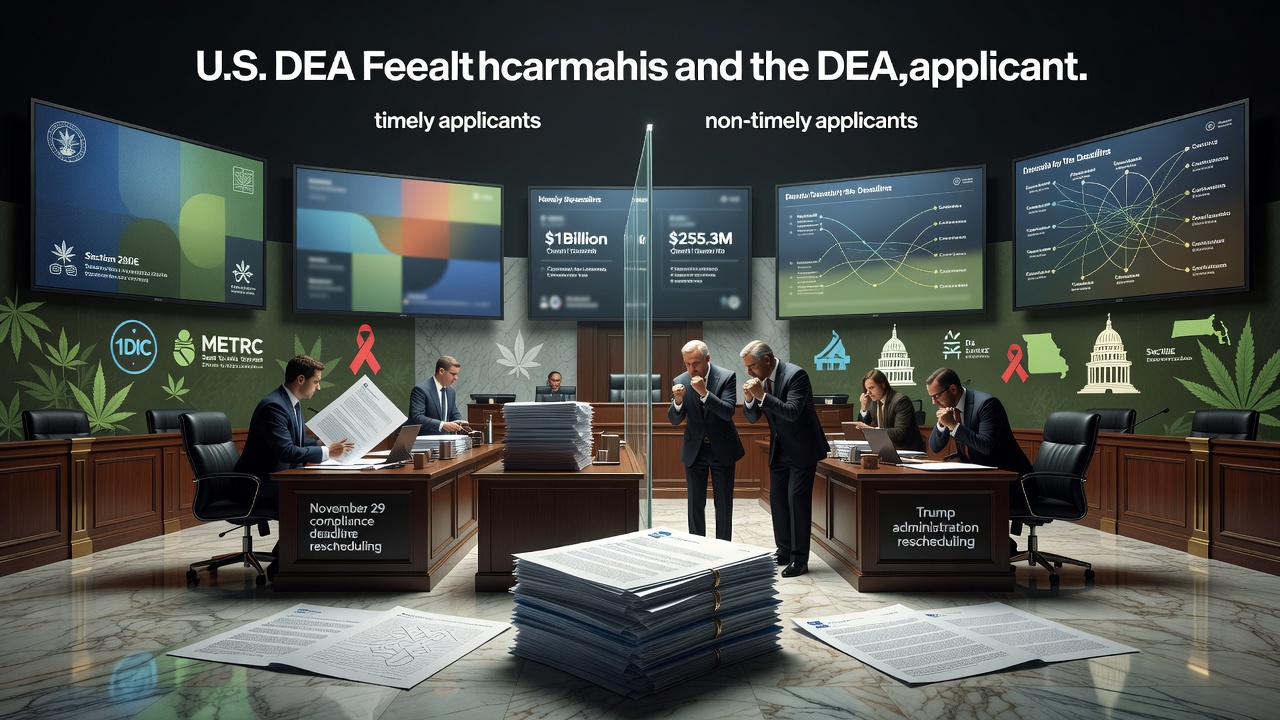
Three medical cannabis companies have sued the Drug Enforcement Administration over a November 29 compliance deadline built into the Trump administration's rescheduling move. At issue: restrictions on which businesses can transact with each other based on when they applied for registration - a distinction the companies argue ignores how state markets actually function.
Why the "timely applicant" line matters to operators
Here's the catch. The DEA's framework splits businesses into "timely" and "non-timely" applicant categories, then bars the two groups from doing business with one another. That sounds tidy on paper, but in practice, a given state may simply not have enough timely-registered operators to meet demand for cultivation, processing or distribution. The lawsuit's framing is blunt: the deadline was "perfunctorily issued" and doesn't account for market realities already built into state licensing structures. For multi-state operators and wholesalers who've spent years building supply chains around existing state license frameworks, a federal registration cutoff that doesn't map to those systems creates real operational risk - contracts in limbo, wholesale menus that may need rework, and compliance teams scrambling to figure out which counterparties remain eligible.
Federal guidance gap leaves states guessing
Massachusetts regulators say they've received no implementation guidance from any federal agency on rescheduling. That's not a small gap. State cannabis control commissions, seed-to-sale tracking vendors, and compliance officers all need clarity on how a Schedule III classification interacts with existing state-level METRC systems, tax treatment, and banking relationships. Without federal guidance, states are left interpreting rescheduling's practical effects on their own - which is part of why this DEA lawsuit carries weight beyond the three plaintiffs named in it. If the deadline stands, it could reshape which licensed operators can legally supply each other, regardless of how long they've held state-level approval.
Congress keeps 280E and testing pressure in place
Meanwile, the Senate Appropriations Committee's funding bills show federal appetite for loosening cannabis rules remains limited. The committee's reports would keep blocking Washington, D.C. from legalizing recreational sales locally, and would direct agencies to continue drug testing safety-sensitive workers for cannabis even after rescheduling takes effect. For operators hoping rescheduling would quickly unwind Section 280E tax burdens or ease workplace drug policy, this is a reminder that tax code and workplace testing rules move on a separate, slower track from DEA scheduling actions.
State-level revenue keeps climbing regardless
Away from the federal fight, state cannabis markets continue generating substantial tax revenue. Missouri's program has produced more than $1 billion in cumulative sales tax revenue for state and local governments since launch. California reported $255.3 million in cannabis tax revenue for the third quarter of 2026 alone. Those figures underscore a pattern regulators and investors should keep in mind: even amid federal uncertainty over rescheduling mechanics, state-regulated markets keep functioning, collecting tax, and generating public revenue - which is exactly why operators want federal rules that complement rather than disrupt what's already working on the ground.