
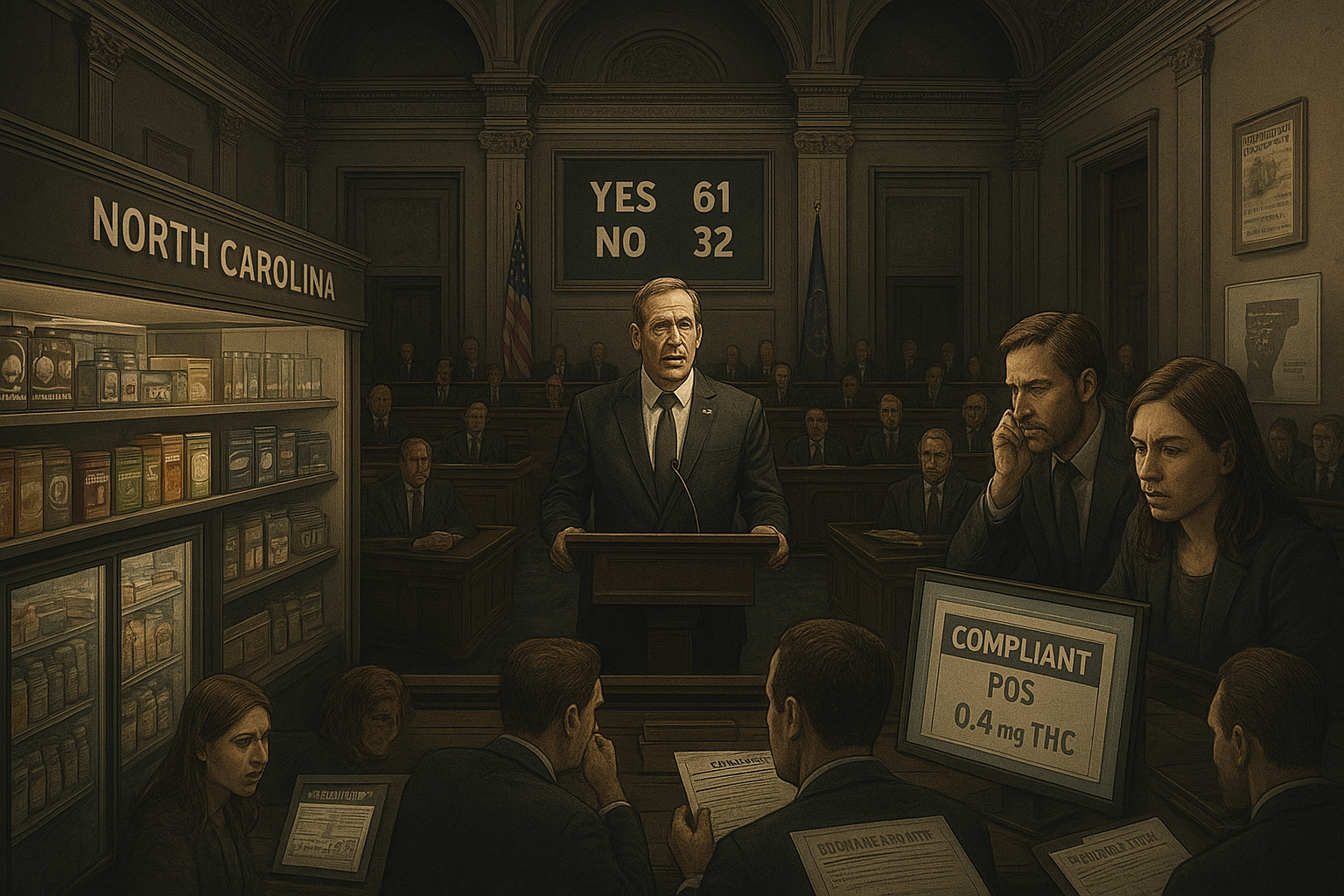
A one-vote-margin fight in the US Senate has left the intoxicating hemp industry with a month's reprieve rather than the clean resolution operators on either side of the debate wanted. Sen. Ted Budd's amendment to strip a 30-day delay out of the continuing resolution failed 61-32 on Aug. 8, meaning the federal restrictions passed last November will now take effect Dec. 11 instead of Nov. 12. For dispensary operators, hemp brands, convenience store chains, and compliance teams who had been building inventory plans around one date, that's a real operational headache - not a minor scheduling footnote.
The underlying law rewrites the federal definition of hemp to account for total THC, not just delta-9, and caps finished hemp-derived products at 0.4 milligrams of combined THC and similar cannabinoids per container. That threshold effectively wipes out most of the intoxicating hemp market as it exists today - THC beverages, gummies, vapes, delta-8 products, and THCA flower would all fall outside the new legal definition. Retailers building compliance systems around this shift face the same pressures already familiar to licensed cannabis operators: batch-level testing, COA verification, and point-of-sale systems that can flag noncompliant SKUs before they ring up a sale. Multi-state operators watching this fight closely should note that the infrastructure gap between regulated cannabis retail and loosely regulated hemp retail is exactly what's driving this legislative standoff - a dispensary running a compliant point-of-sale for Vermont dispensaries operates under a licensing and testing regime that most gas-station hemp coolers simply don't. point-of-sale for Vermont dispensaries
Why the Delay Matters More Than It Looks
Thirty days doesn't sound like much. In practice, though, it's the difference between a hard compliance deadline and a moving target that retailers can't plan inventory around. Wholesalers with hemp-derived beverage lines, brands with THCA flower SKUs, and convenience chains carrying delta-8 vapes now have to decide whether to keep ordering product that may be illegal to sell in five weeks, or pull back early and eat the wholesale pricing hit. That's a real cash-flow question for small operators who don't have the working capital cushion that larger multi-state operators carry.
Budd's argument, delivered on the Senate floor, centered on youth access - packaging that mimics candy and snack brands, easy convenience-store availability, and North Carolina emergency department data he cited showing sharp increases in cannabis-related visits among minors. Whatever one thinks of the broader THC threshold debate, the packaging and marketing concern is one compliance officers across the regulated cannabis industry have raised for years about unregulated hemp products sold outside licensed dispensary channels.
A Split Inside the Industry, Not Just Inside Congress
The coalition opposing Budd's amendment - 105 organizations including the US Hemp Roundtable, National Association of Convenience Stores, and several North Carolina hemp trade groups - didn't argue the market should stay unregulated forever. They argued the extra month gives Congress room to legislate good manufacturing practices, block synthetic cannabinoid imports, and set enforceable age limits, rather than simply zeroing out most of the market on a fixed date. That's a meaningfully different regulatory philosophy than the one embedded in the 0.4-milligram cap, and it mirrors a tension licensed cannabis operators know well: strict potency thresholds are easy to write into statute but hard to calibrate without pushing legitimate businesses out alongside the bad actors.
North Carolina's Parallel Standoff
The federal fight has an exact mirror in Raleigh, where House Bill 328 would write the same 0.4-milligram threshold directly into North Carolina law. The Senate passed the conference report 37-6 back on July 2, but the House has repeatedly declined to vote on it, and the bill sat in the Rules Committee when lawmakers left session. Speaker Destin Hall says there's broad agreement the current unregulated market can't continue - the disagreement is over what replaces it. Because HB 328 would embed the threshold in state statute rather than borrow the federal definition, North Carolina's restriction could survive even if Congress eventually delays, softens, or rewrites the federal rule. For operators, that's the real lesson here: state-level statutes are increasingly detached from federal timelines, and compliance planning built around one deadline in Washington may not protect a retailer from a different deadline in a state capitol.