
Cash flow, not top-line growth, has become the dividing line between cannabis operators that survive and those that quietly restructure. Over the past five years, plenty of multi-state operators posted respectable revenue numbers while bleeding cash, piling on debt, or diluting shareholders through repeated equity raises just to keep the lights on in the budroom. Green Thumb Industries (OTC: GTBIF) has largely sidestepped that trap, and its first-quarter results are a case study in what disciplined cannabis retail actually looks like.
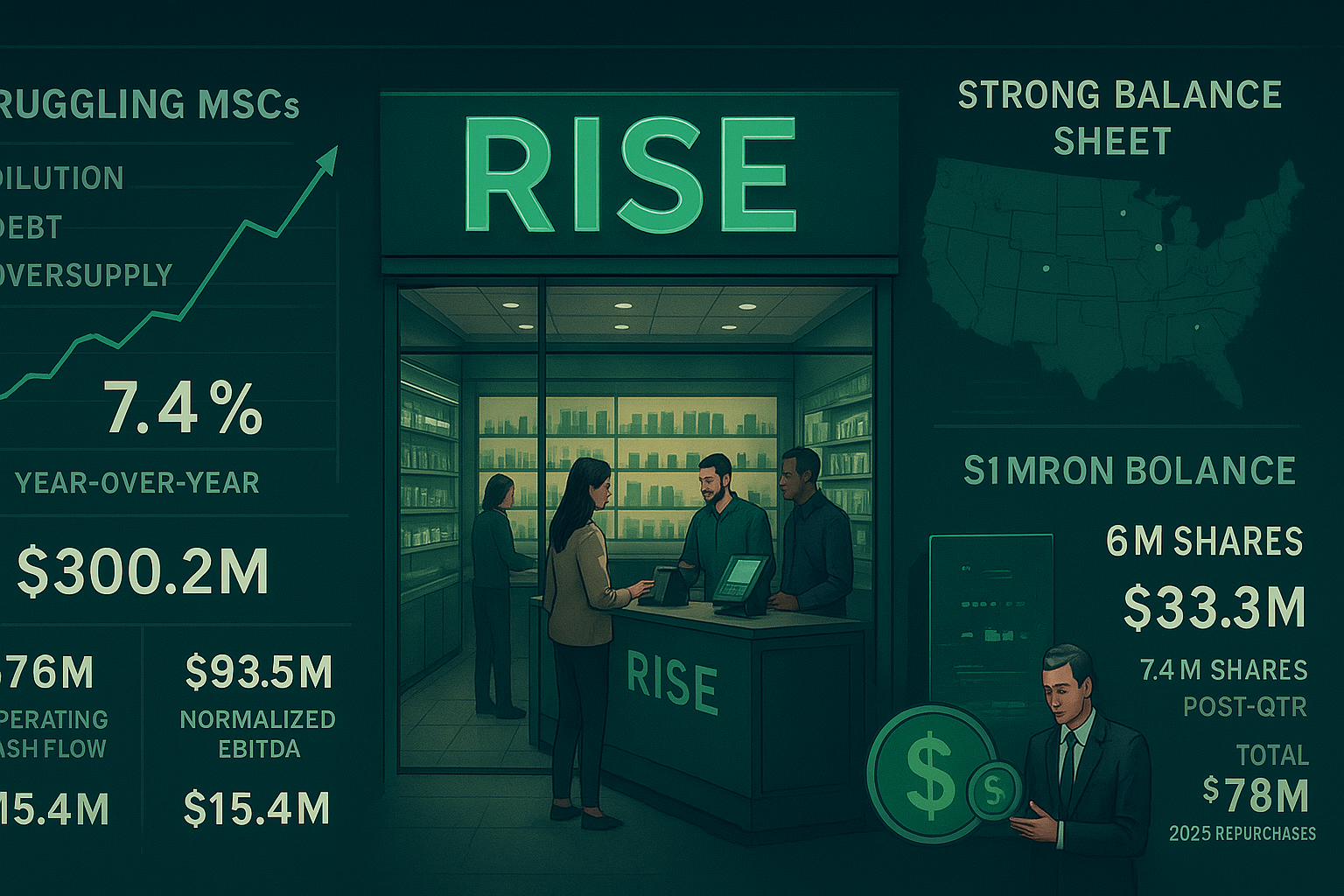
Revenue rose 7.4% year over year to $300.2 million. That's a solid but unremarkable growth rate by cannabis standards. What separates Green Thumb from its peers is what happened below the revenue line: $76 million in operating cash flow, $93.5 million in normalized EBITDA, and GAAP net income of $15.4 million. In an industry where inventory shrinkage, compliance overhead, and 280E tax exposure routinely eat into margins, that kind of conversion from sales to actual cash is rare. Operationally, the back office matters just as much as the storefront here - inventory accuracy, seed-to-sale tracking through METRC, and tight point-of-sale reconciliation all feed into whether a company like this can post clean numbers quarter after quarter. Retailers evaluating their own back-end systems, including platforms like cannabis store POS software, often find that the difference between a profitable quarter and a messy one comes down to exactly this kind of operational precision, not just foot traffic.
Why Balance Sheet Strength Matters More Than Growth Headlines
Green Thumb ended the quarter with roughly $344.5 million in cash and $289.9 million in total debt - a balance sheet that gives management room to maneuver without begging capital markets for help. Rather than issuing new shares, the company has been buying its own stock back: about 6 million shares for $33.3 million during the quarter, followed by another 7.4 million shares after quarter-end, pushing total 2025 repurchases to nearly $78 million. That's a meaningful signal. Buybacks of that size only make sense if management believes the business throws off more cash than it needs for reinvestment, and that the stock is undervalued relative to that cash-generating capacity.
Contrast that with operators who've spent the last several years diluting shareholders just to fund store buildouts or service debt. Dilution might buy time, but it rarely buys confidence. Buybacks send the opposite message, and in a sector where investor trust has been repeatedly tested, that message carries weight.
Selective Expansion Instead of Growth at Any Cost
Green Thumb now runs more than 110 Rise dispensaries nationally, with exposure to both medical and adult-use markets, and continues adding footprint in states like Minnesota and Texas. The company isn't chasing every license opportunity or market entry available - it's picking spots. That restraint matters. Overexpansion, particularly into markets with uncertain regulatory timelines or oversupplied wholesale pricing, is exactly what sank several of the company's peers. Vertical integration only pays off when store-level economics support it; adding dispensaries without matching demand just adds compliance logs, rent obligations, and payroll without the revenue to back it up.
What Still Works Against the Industry
None of this erases the structural headwinds facing cannabis retail. Federal legalization remains stalled, Section 280E still imposes an outsized tax burden on plant-touching businesses, and pricing pressure persists in mature adult-use markets where wholesale menus have compressed year after year. Cashless payment limitations, driven by continued federal banking restrictions, remain an operational headache for dispensaries and a compliance risk for payment providers trying to work around them.
Smaller, higher-risk operators may still deliver bigger returns if federal reform accelerates - that's the nature of leveraged upside. But Green Thumb's case rests on something more durable: proof that a cannabis retailer can generate consistent profit and real cash flow under today's rules, not tomorrow's hoped-for legislation. In a sector still sorting out which business models actually work, that's not a small distinction.