
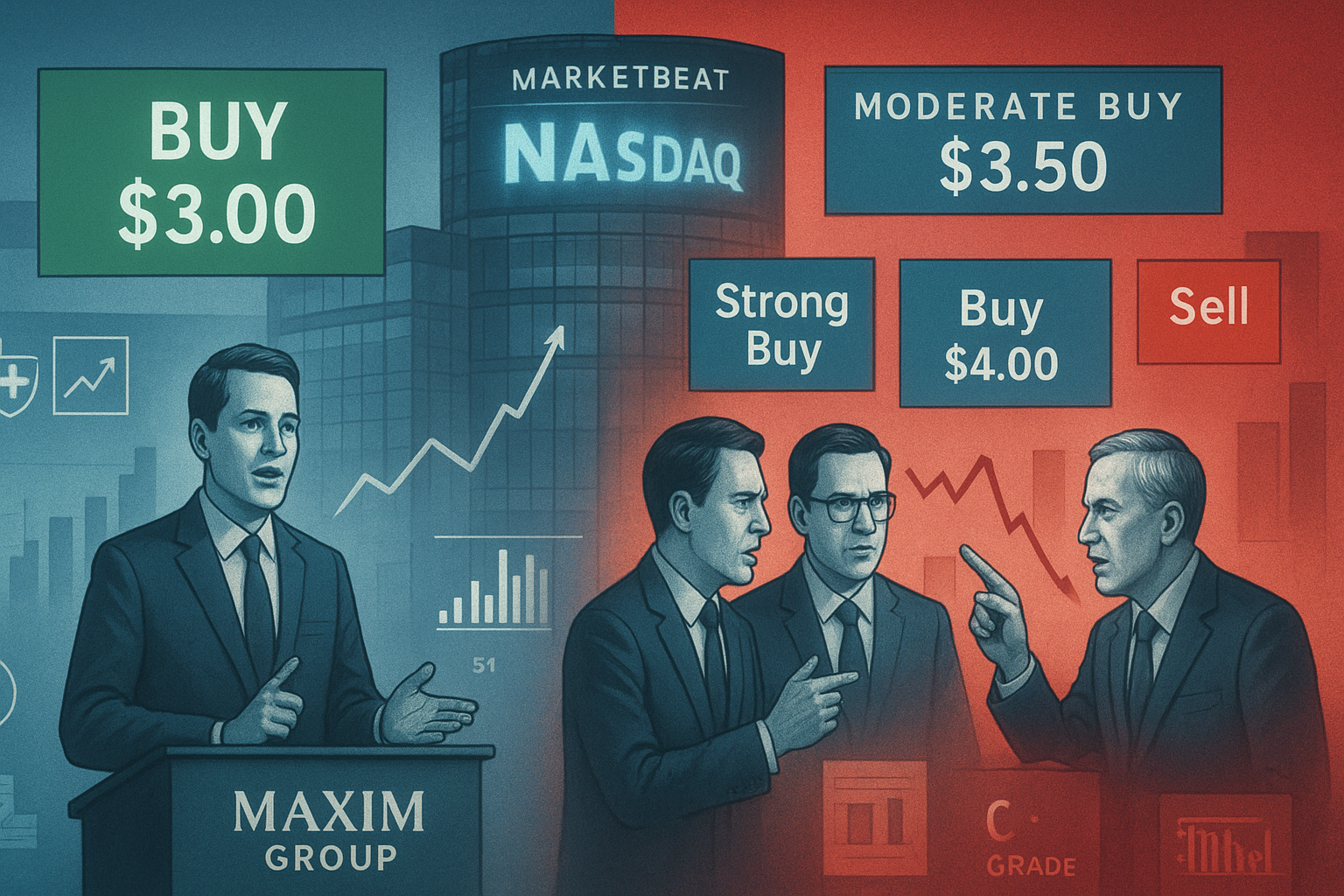
Health In Tech, Inc. (NASDAQ: HIT) drew fresh scrutiny from Wall Street last week after Maxim Group issued a detailed earnings forecast stretching through fiscal 2027, projecting continued net losses per share even as the firm maintains a bullish "Buy" rating and a $3.00 price target. The estimates, published Friday, August 14th, and authored by analyst A. Klee, project a Q3 2026 loss of ($0.04) per share, narrowing gradually before a brief flirtation with profitability in early 2027. For a company still working to prove out its underwriting model, that kind of multi-quarter visibility from a covering analyst is notable - not because it promises anything, but because it signals someone is willing to model this out five quarters at a time.
Health In Tech operates in the health insurance technology space, not cannabis retail, but the dynamics facing its investors will feel familiar to anyone tracking emerging, thinly covered sectors where analyst sentiment diverges sharply. That divergence is exactly what's playing out here. Compare that to how fragmented data and inconsistent reporting standards have historically complicated valuation work in ancillary cannabis technology and licensing platforms, where investors often lean on niche data providers the way HIT analysts lean on firms like Maxim Group and Craig Hallum. In sectors adjacent to plant-touching cannabis businesses - payment processors, compliance software vendors, even something like a cannabis wholesale platform illinois operators might use to manage B2B transactions - the absence of standardized disclosure tends to widen the gap between bulls and bears. HIT's coverage universe shows a similar split. cannabis wholesale platform illinois
Three Analysts, Three Very Different Views
The numbers tell a story of genuine disagreement, not noise. One equities analyst carries a Strong Buy rating on HIT, another holds a Buy, and a third has assigned an outright Sell. That's a wide spread for a stock with only a handful of active coverage relationships. Wall Street Zen downgraded the shares from "hold" to "sell" back in late April, while Craig Hallum initiated coverage that same month with a "buy" call and a $4.00 target - a full dollar above Maxim's own price expectation. Weiss Ratings, for its part, restated a "sell (d)" grade in late June. Put plainly: there is no consensus story here, only a consensus rating. MarketBeat's aggregation lands HIT at "Moderate Buy" with an average target of $3.50, a figure that averages out real conviction differences rather than resolving them.
What the Loss Trajectory Actually Signals
Maxim's own model shows losses persisting through most of the forecast window - FY2026 at ($0.10) per share, followed by a mixed FY2027 that includes a rare projected penny of profit in Q1 before slipping back into red ink by Q4. That's not a growth story in the conventional sense; it's a patience story. Investors betting on HIT are, in effect, underwriting the idea that a health insurance technology platform can scale enrollment and distribution faster than it burns capital. Analysts covering thinly traded, pre-profitability names in specialty tech sectors - health insurance platforms included - routinely face this tension between long-range optimism and near-term cash realities. The rating spread on HIT reflects exactly that unresolved question, and it's one that won't get settled by a single earnings print.